Joyous Gard
Le Morte d'ArthurJoyous Gard is Sir Launcelot’s favourite castle and the place he won by his own hands. In the narrative it is more than a stronghold: a home where he welcomes fellow knights and offers refuge, a contested site in the break between him and King Arthur, and at last the chosen resting place that draws his companions and his brother Sir Ector de Maris back to him. Its name also carries a reversal, for the index records that it is later called Dolorous Gard.
Identity and uncertain location
The book does not establish Joyous Gard’s location with certainty. An introductory account says that it is sometimes identified with Berwick, while reporting competing traditions: some people say it was Anwick, others Bamborough. Bamborough lies in Northumberland, southeast of Berwick, and the account describes its castle as standing on a high rock projecting into the North Sea. These competing identifications make the castle’s geography uncertain even as its importance in the story is unmistakable.
The historical note also links the possible Bamborough site to the supposed period of Arthur’s reign, saying the castle was founded in the middle of the sixth century. It recalls the alms Launcelot gave there—food, drink, and money to those who came—connecting the legendary castle’s identity with his reputation for generosity. The place thus bears both a martial association and a domestic one: it is a castle won through prowess, but also a residence equipped to receive others.
A refuge and a household
When Sir Tristram and La Beale Isoud come to England, they encounter a tournament at which Tristram, in disguise, overthrows fourteen Knights of the Round Table. Launcelot recognizes the truth after Isoud sends him a ring identifying Tristram. He abandons the contest, follows the pair, and brings them to Joyous Gard, his own castle. There he houses them in a place described as furnished well enough for a king and queen to stay, and instructs his people to honour and love them as they would honour and love him.
This welcome gives the castle a distinctive function within the story. Joyous Gard is Launcelot’s personal domain, but its hospitality extends beyond his own household and allegiances. Tristram and Isoud find shelter there despite Isoud’s connection to King Mark; Launcelot’s protection makes the castle a refuge for the couple. When King Arthur arranges a further tournament at Lonazep, close by, Launcelot warns that the gathering may put his companions in danger because many knights envy them. He nevertheless makes arrangements for Isoud to watch from a private place suited to her status. Joyous Gard’s vicinity to the tournament site draws its household into the wider political and chivalric tensions of the court.
Fellowship and loyalty
The castle’s household is not confined to Tristram and Isoud. When Sir Palamides arrives after his departure from the people of King Hermance’s city, he first goes to Lonazep and, learning that Tristram is elsewhere, crosses the Humber to Joyous Gard. Tristram’s people have been instructed to alert him when an errant knight arrives. Dinadan identifies Palamides; the two knights greet each other warmly, and Palamides stays with Tristram’s company.
Joyous Gard also marks the cost of leaving that fellowship. Later, Palamides is captured after killing a knight at the Lonazep tournament. Bound and being taken toward Pelownes for judgment, he tells a passing knight that he is being led to his death and asks that his message of forgiveness be carried to Tristram, Isoud, Arthur, and the fellowship of the Round Table. He regrets having left Tristram, believing that had he remained with his lord his life might have been saved. The report reaches Joyous Gard, and Tristram prepares to rescue him; Launcelot reaches Palamides first. The castle is therefore a point of return and communication, where friendship becomes practical obligation even when the endangered companion is absent.
Launcelot’s own conduct at Joyous Gard gives the castle an additional association with reconciliation. The literary account emphasizes his patient efforts to make peace with Gawaine despite Gawaine’s taunts and violence, both as Launcelot leaves the realm and during the siege of the castle. Its walls contain not only a military standoff but also a prolonged test of Launcelot’s restraint and desire to repair a broken relationship.
Siege, departure, and changing name
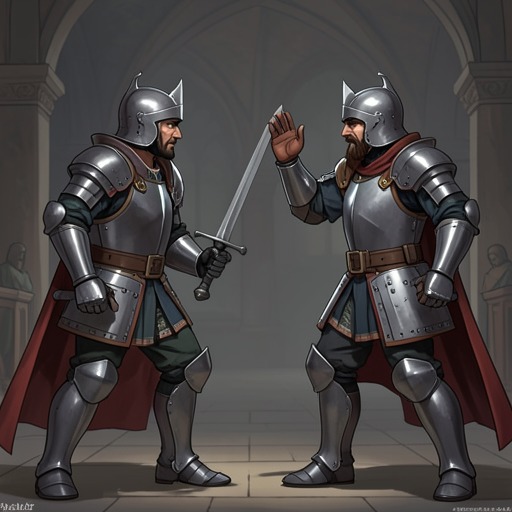
The book’s chapter sequence makes Joyous Gard the centre of the conflict between Arthur and Launcelot. At Gawaine’s request, Arthur decides to make war on Launcelot and lays siege to the castle. The chapters proceed from Arthur and Launcelot’s communication, through the preparations of Launcelot’s kinsmen for battle, to the queen’s deliverance and the confrontation between Gawaine and Launcelot. Launcelot eventually departs from Arthur and from Joyous Gard, going overseas with knights who accompany him. The castle’s role as a home is thus overtaken by its place in the fracture between the king and his former companion.
The place-name itself registers this altered emotional landscape. The book’s index notes that Joyous Gard is later Dolorous Gard, while the introductory note preserves uncertainty about whether its earthly counterpart should be sought at Anwick or Bamborough. The change from joy to sorrow resonates with a narrative in which welcome and fellowship give way to siege, separation, and loss.
Burial and remembrance
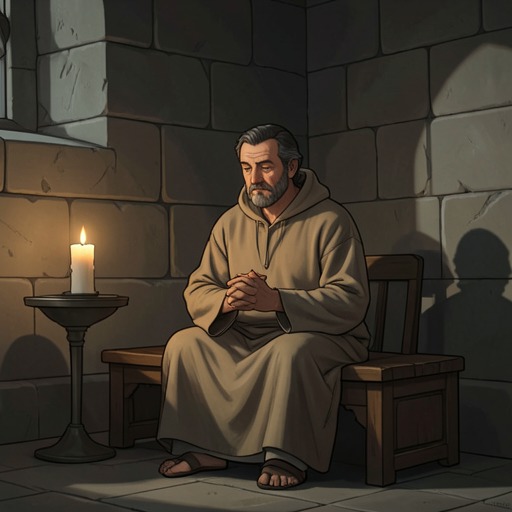
Joyous Gard becomes Launcelot’s final destination because he had vowed to be buried there. Near the end of his life, he asks his companions to carry him to the castle, explaining that he repents of having broken his vow by being elsewhere. After his death, the bishop and his companions set out with his body. They travel for fifteen days, with a hundred torches burning around the procession, before laying him in the body of the choir at Joyous Gard. His face remains uncovered according to the custom described in the narrative, and prayers and psalters are said over him.
The burial draws Sir Ector de Maris into the castle’s story for a final time. He has spent seven years searching England, Scotland, and Wales for his brother. When he arrives during the funeral service, Sir Bors tells him that Launcelot is dead; Ector casts aside his shield, sword, and helm, then collapses in grief. The scene makes the castle a place of recognition and lament as well as a chosen burial site. Launcelot’s body returns to the stronghold he had won, and the fellowship gathered there must reckon with the end of the knight whose hospitality, loyalty, and prowess had given the place its meaning.